Henna is one plant doing four different jobs in American bathrooms: dyeing hair copper to black without ammonia or PPD, staining temporary designs on hands and feet, tinting eyebrows, and — in its blue-black cousin jagua — replacing the "black henna" that sends people to dermatologists every festival season. Most confusion comes from treating those four as one product. They are not. This page walks through what henna actually is, how the stain works, which product is right for which job, and where the real safety line sits, then hands you off to the deep guides on henna hair dye, henna kits and cones, henna designs, henna brows and jagua.
Henna: free designs and honest guides
Henna is a natural dye made from the dried leaves of the Lawsonia inermis plant. On skin it stains orange when the paste comes off, darkens to a reddish brown over the next two or three days, and fades in one to three weeks; on hair it gives orange, auburn or burgundy shades. Here are 70 free henna designs to copy, each with steps and a printable stencil, plus plain-English guides to kits, cones, hair dye and jagua, and why "black henna" is not henna at all.

Written by Sukie
, updated November 14, 2026
Henna designs to copy
76 designs drawn by DesignHenna, each with drawing steps and a printable stencil. Filter by where it goes, what it shows and how hard it is.
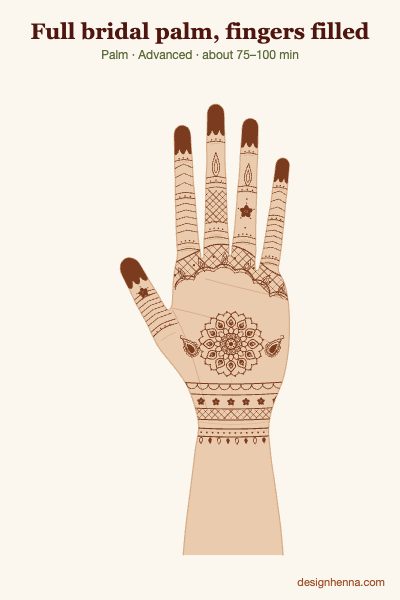 Full bridal palm, fingers filledPalm · Advanced · 75–100 min
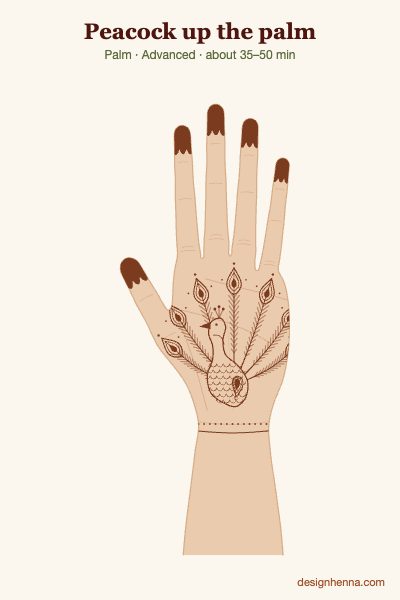 Peacock up the palmPalm · Advanced · 35–50 min
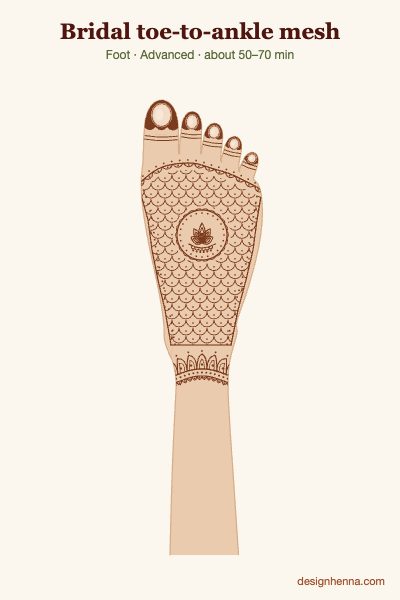 Bridal toe-to-ankle meshFoot · Advanced · 50–70 min
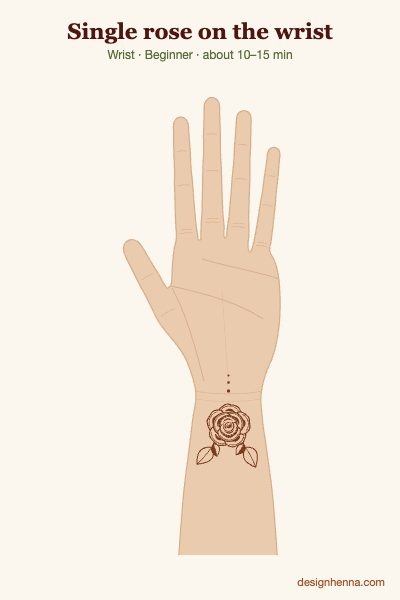 Single rose on the wristWrist · Beginner · 10–15 min
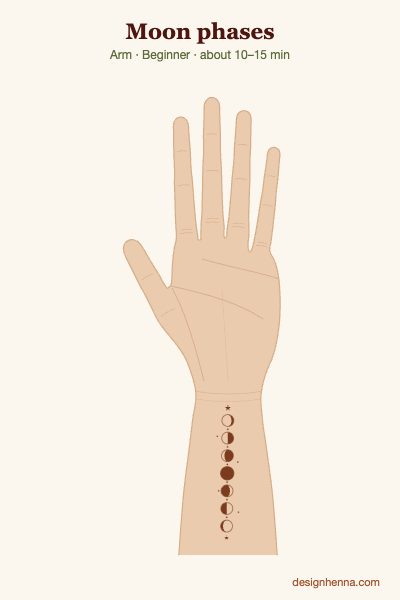 Moon phasesArm · Beginner · 10–15 min
 Jaal net with paisleysBack of hand · Advanced · 60–80 min
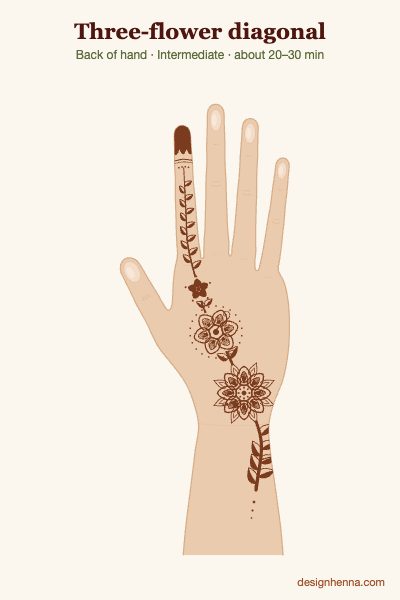 Three-flower diagonalBack of hand · Intermediate · 20–30 min
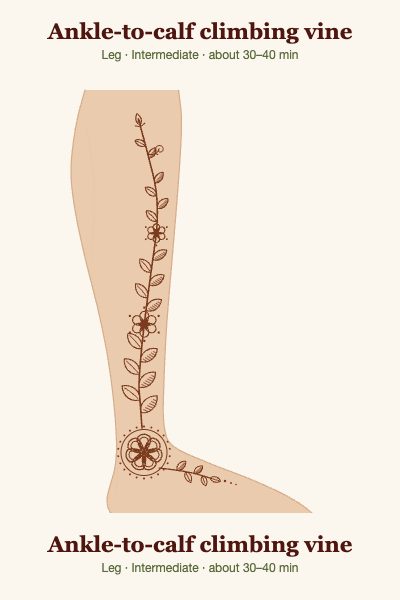 Ankle-to-calf climbing vineLeg & ankle · Intermediate · 30–40 min
Shop by category

Hair Dye
The honest guide to shades, mixing, gray coverage and what to buy

Kits & Cones
What should be in one, which type to buy, and the best-ranked kits on Amazon
Designs
Every style from simple to bridal, how to choose one, and how to get it onto your skin
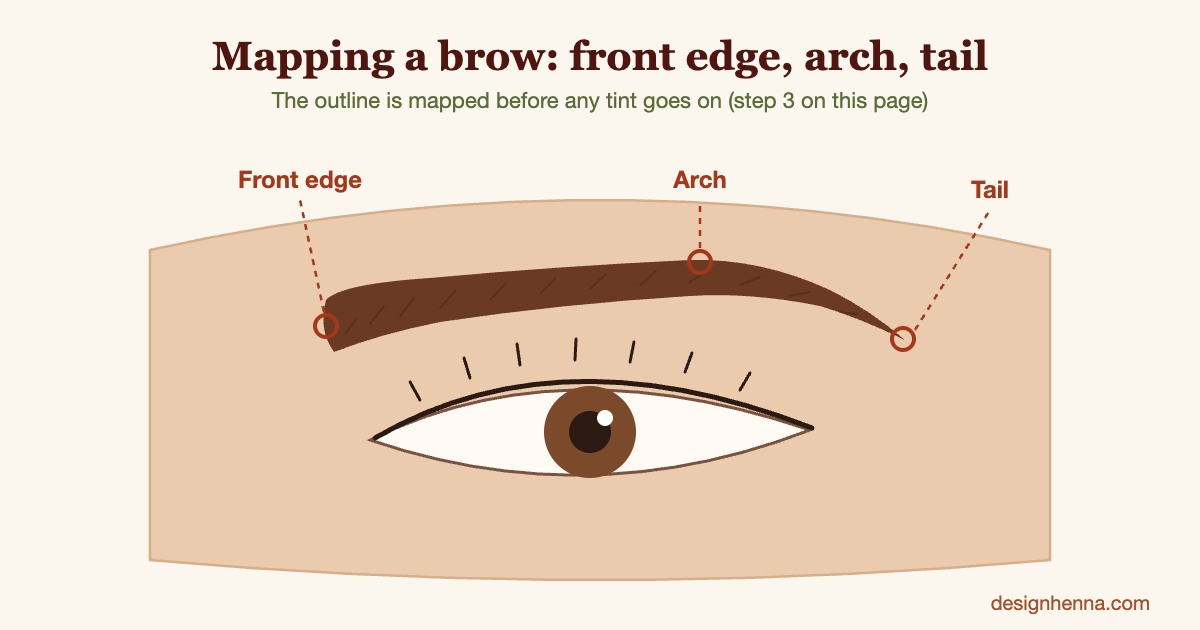
Brows
The honest guide — results, how long they last, what US rules say, and what to check on the label

Jagua
Jagua explained: the fruit gel that stains skin blue-black for 1–2 weeks, how it differs from henna and PPD black henna, application, aftercare, best gels and kits.
Holiday Henna
A dated plan for Halloween, Thanksgiving, Christmas and New Year, plus fall and winter motifs
Holiday henna, coming up
Apply natural henna two evenings before the day so the stain peaks on time.
- Dec to FebWinter Henna Designs
- Fri, Dec 25Christmas Henna Designs
- Fri, Jan 1New Year Henna Designs
Every date and kit in one place: Holiday Henna Designs
What henna is (and what it isn't)
Henna is the leaf of Lawsonia inermis, a shrub in the loosestrife family that grows in hot, dry climates from Rajasthan to Morocco. The leaves are dried and milled into a green powder that smells like hay. The active molecule is lawsone (2-hydroxy-1,4-naphthoquinone), which sits inside the leaf until it is released by a mildly acidic liquid; once released it migrates into keratin — the protein in skin, hair and nails — and binds there. That bond is why a henna stain cannot be washed off: it has to exfoliate or grow out.
Two consequences follow from that chemistry and explain almost every question people ask.
First, henna is one color. Lawsone stains orange, deepening to reddish-brown over two days as it oxidizes. There is no such thing as natural green, blue or black henna. "Neutral henna" is a different plant (cassia). "Black henna" is either indigo layered over henna (fine, for hair) or PPD (not fine, for anything).
Second, the stain depends on dye release, not on brand. Fresh powder, an acidic mix, several hours of rest and warmth produce more lawsone and a darker result; old powder or a rushed mix produces a faint orange no matter what the packet promises.
The four jobs henna does
| Use | What you buy | What it looks like | How long it lasts |
|---|---|---|---|
| Hair color | Pure henna powder or henna + indigo blends | Copper on light hair, red sheen on dark hair, brown/black with indigo | Permanent; fades slowly, grows out |
| Body art (mehndi) | Body-art-quality cones or powder + applicator | Orange → deep reddish brown on palms, lighter on backs of hands | 1–3 weeks |
| Brows | Henna brow tint kits | Filled-in, powdered brow; stains hair and skin | Up to 6 weeks on hair, ~1 week on skin |
| Black temporary tattoo | Jagua gel (Genipa americana) | Blue-black after 24–48 h | 1–2 weeks |
Each of those has its own guide on this site; the sections below give you enough to choose a lane.
Henna for hair: what actually happens on the strand
Henna hair dye is the largest category by far in the US, and it behaves nothing like box dye. Box dye opens the cuticle with ammonia and either lifts pigment (lightening) or deposits synthetic color. Henna deposits lawsone onto the keratin without opening the cuticle. The result is translucent: it adds red-orange to whatever base is there. On gray or blonde hair that reads as bright copper; on medium brown it reads as auburn in sunlight; on black hair it is a red glint you notice mostly outdoors.
That is why the "colors" of henna hair dye — brown, dark brown, black, burgundy — are almost always henna plus indigo (Indigofera tinctoria), sometimes with amla or cassia. Indigo is blue; layered on henna's orange it makes brown, and applied as a second step over a fresh henna coat it makes black. Products sold as one-step browns pre-mix the two, which works well on hair that already has some pigment and less well on high-gray hair, where a two-step application is the reliable route. The henna hair dye guide covers mixing, timing and shade selection in full; the henna for gray hair page is specifically about coverage, and indigo hair dye explains the second step.
Three practical truths about hair henna that the packaging rarely states:
- Strand-test first. Henna is close to permanent and cannot be bleached out predictably — bleach over henna often turns green-orange. A test on a snippet from the nape shows the real shade.
- Pure henna is a two-to-four-hour job. The paste needs to sit on the hair that long for a full stain. "30-minute" products are either pre-released pastes or contain additional dyes; check the ingredient list.
- Metallic salts are the deal-breaker. Some cheap "henna" powders add metallic salts to shift the color. Those react badly with any future chemical service. If the ingredient list says anything other than plant names, treat it as a chemical dye.
Henna for skin: cones, powder and the stain that darkens overnight
Body-art henna is the same leaf sifted finer and stored better. A cone — the rolled cellophane tube you see at festivals — contains henna powder, water or tea, a little sugar for stickiness and an essential oil rich in monoterpenes (cajeput, tea tree, lavender) that helps lawsone release. Fresh cones are the difference between a rich brown stain and a faint orange one, which is why serious artists freeze their cones and thaw only what they need.
The application sequence is the same whether you use a cone, an applicator bottle or a stencil sticker:
- Clean, oil-free skin. Lotion blocks the stain.
- Apply the paste; leave it 4–12 hours. Longer is darker.
- Keep the paste warm and slightly damp with a lemon-sugar dab or a sealant balm so it doesn't flake off early.
- Scrape (don't wash) the paste off. Avoid water for the first 12 hours.
- The stain starts orange and darkens to reddish-brown over 48 hours.
Palms, fingers and soles stain darkest because their keratin is thickest; the back of the hand is medium; the upper arm and torso are lightest. That is why finger henna designs look so dark in photos and why a delicate back of hand henna design is chosen for openness rather than depth. The henna kit hub compares cone packs, powder kits and stencil sets; if you're starting from zero, henna designs has every style from simple and easy to bridal.
The safety line: natural henna versus "black henna"
This is the section to read if you read nothing else. The US Food and Drug Administration states plainly that henna is approved only for use as a hair dye, and it warns specifically about "black henna": temporary-tattoo paste that contains para-phenylenediamine (PPD), a coal-tar hair-dye ingredient, to produce a jet-black stain in an hour. PPD in contact with skin can cause severe blistering, permanent scarring and lifelong sensitization — after one bad reaction, ordinary hair dye can trigger it for the rest of your life. Beach-boardwalk and festival stalls are the usual source.
How to tell the difference in five seconds:
- Color of the paste: natural henna paste is greenish-brown; PPD paste is jet black.
- Color of the stain: natural henna is orange for the first day; PPD is black immediately.
- Time: natural henna needs hours on the skin; "black henna" is done in 30–60 minutes.
- Smell: natural henna smells of hay and essential oil; PPD paste smells chemical.
- Ingredient list: henna, water, sugar, essential oil — and nothing else.
If you want black, use jagua. It is fruit-based, stains blue-black over two days and carries none of PPD's risks (people with latex or specific fruit allergies should patch-test). Our black henna page goes deeper into identifying PPD products and what to do after a reaction, and the American Academy of Dermatology's guidance on tattoo skin reactions — redness, swelling, itching or blisters, sometimes weeks later — is worth a read before any festival.
Henna brows and the beauty-counter version of henna
Brow henna is sold both as a salon service and as home kits, positioned as a longer-lasting, skin-staining alternative to brow tint; current kit prices are in the product blocks on the brows guide, refreshed from Amazon daily. The trade-offs are covered in the henna brows guide: the effect is bolder than tint, the skin stain fades within a week, and some brow "henna" products contain PPD or other oxidative dyes — the same ingredient-list rule applies. If you only want the hairs colored, a conventional tint is gentler; if you want the filled-in look without makeup, henna is the point.
Jagua: the black temporary tattoo that is actually safe
Jagua gel is the pressed juice of the unripe Genipa americana fruit, thickened into a gel. Its molecule, genipin, reacts with the amino acids in skin to form a blue-black pigment — which is why the stain takes a day or two to appear and why the gel itself is nearly clear. It lasts one to two weeks, works on all skin tones, and is the correct answer for anyone who wants a realistic black temporary tattoo. Artists mix jagua with henna ("hengua") to get a deep chocolate-black. The jagua hub compares gels and kits; jagua gel covers application and aftercare.
Choosing your first henna product: a short decision guide
- You want to color hair, no chemicals, and you have some gray: a two-step henna + indigo, or a reputable pre-blended brown. Start at henna hair dye.
- You want copper/red hair: pure henna powder is all you need; see henna powder for what "body-art quality" and "triple-sifted" mean.
- You want a design for a wedding, festival or just because: a pack of fresh natural cones and a couple of stencil sheets. See henna cones and henna tattoo kit.
- You want a black design: jagua, never "black henna". See jagua.
- You want filled-in brows for a month: a henna brow kit, patch-tested. See henna brows.
- You want to know how long it lasts before committing: how long does henna last.
How we research these pages
Every product on DesignHenna is chosen by reading the listing's ingredient list and manufacturer instructions, not by commission — every Amazon product in a category pays the same rate. Prices, images and availability are pulled from Amazon's Product Advertising API daily and each product block shows the date. We don't show star ratings because Amazon no longer supplies them through its API; read reviews on Amazon before you buy. Guides are drafted with AI assistance and edited by Sukie before they go live; sources are listed at the bottom of every page and the update date reflects real changes. See about DesignHenna and the affiliate disclosure.
Hair Dye guides
- Best Henna Hair Dye in 2026The picks by shade, for gray coverage, for beginners and for the budget — chosen from the ingredient lists, not the ads
- Black Henna Hair DyeHow to get jet black with henna and indigo, no ammonia, no PPD — routine, maintenance and what to buy
- Henna Beard DyeHow to color a beard brown or black with henna and indigo, without PPD — routine, timing, skin staining and what to buy
- Henna Dye Hair ColorsThe shade chart — what every henna, indigo and cassia blend gives on light, medium, dark and gray hair
- Henna for Gray HairWhat it really covers, why the first coat is orange, the two-step method for brown and black, and what to buy
- Henna Hair Dye Before and AfterWhat gray, blonde, brown, black, box-dyed and bleached hair actually become — shade by shade, in words, with no photos
- Indigo Hair DyeThe plant that turns henna brown and black — how it works, the two-step routine, ratios, timing, and what to buy
Kits & Cones guides
- Black HennaWhy the FDA warns against it, how to spot PPD paste in five seconds, what to do after a reaction, and the safe ways to get a black design
- Henna ConesHow to tell fresh from stale, what's inside a good one, how to use and store them, and the packs to buy
- Henna Gift SetWhy most boxed sets fail the natural test, three builds that pass, and how to keep Black Friday cones fresh until Christmas
- Henna PartyWhether to hire an artist or do it yourself, how much time and paste 10 to 50 guests need, and what to send everyone home with
- Henna PasteWhat it is, the ratios per 100 g of powder, how to mix it, when it's ready, how to store it, and how to fix a bad batch
- Henna PowderBody-art quality vs hair grade, how to read a label, how to mix it for hair or skin, and the powders US buyers rank highest
- Henna Tattoo KitWhat a good kit contains, the kits to avoid, how to use one for a dark stain, and the best-ranked kits on Amazon
- Henna Tattoo StickersPrinted mehndi-look transfers — how to apply them cleanly, how long they last, and when real henna is the better buy
- How Long Does Henna Last? The real timelines for skin, hair, brows and jagua — and what makes each longer or shorterHow long does henna last on skin, hair and brows? Day-by-day timelines, why placement matters, what shortens or extends a stain, jagua compared, removal.
- How Long Does Henna Take to Dry? Dry to the touch, how long to leave henna on, and when the stain is finishedHow long does henna take to dry? 10–45 minutes to the touch, but leave it on 2–15 hours for color. Six sources compared, plus a 48-hour timeline.
- How to make henna darkerThe four things that control the stain, an aftercare routine, and which popular tips are myths or unsafe
- How to Remove Henna From SkinThe methods that actually speed it up, the ones that damage skin, and what to expect day by day
- Pre-Filled Henna ConesWhat ready-to-use really means, how to keep the paste alive, how to read the ingredient line, and which pack size to buy
- Red HennaThe red-brown stain natural henna really makes, why red and pink cones are something else, and how henna turns hair red
- Where to Buy Henna in the USAmazon, grocery and craft stores, specialist sellers — and how to avoid the bad kind wherever you buy
Designs guides
- Arabic Henna DesignsBold florals, flowing vines and the negative space that makes them work
- Back Henna DesignsNape to lower back, zone by zone, drawn by a friend and planned around the dress
- Back of Hand Henna Designs15 layouts, the flow rule that makes them flatter your hand, and how to draw them
- Bridal Henna DesignsStyles, the two-day timeline, what it costs in the US, and how to brief an artist
- Butterfly HennaSix drawn designs to copy, where each one sits on the body, and how to draw a butterfly in five strokes
- Easy Henna Designs20 hand, wrist and foot layouts that look harder than they are
- Finger Henna Designs30 ideas, where each one goes, and why fingers stain darker than anything else
- Henna Arm DesignsA placement ladder from the wrist cuff to the full sleeve, why arms stain lighter than hands, and five sets to copy tonight
- Henna Designs for FeetToe caps, anklet bands, full soles and sandal-strap layouts — and why the foot holds the darkest stain on the body
- Henna Designs on PaperHow to set up practice sheets, which pens and paper to use, and how to move a drawing onto skin
- Henna Flower DesignsThe ten flowers behind almost every design, how to draw each in a few strokes, and where it goes
- Henna for MenWhere it goes, how dark each placement reads, brown versus black, a wedding-weekend plan, and the eight questions men actually ask
- Henna FrecklesHow to place and size the dots, how long they take and last, and how to do it safely on your face
- Henna Hand Designs50 ideas mapped to the palm, back, fingers and wrist — and which zone stains darkest
- Henna Heart DesignsTwo teardrops, nine ways to build on them, and where each one sits best
- Henna MeaningWhere the word comes from, why henna marks weddings and Eid, and which motif meanings anyone can actually source
- Henna StencilsSticker sheets, printable templates and stencil kits — which to buy and how to use them
- Henna Tattoo DesignsWhat a henna tattoo actually is, 48 ideas by placement and motif, and a first-tattoo procedure that stains dark
- Henna TattooWhat it is, how the stain develops, how long it lasts, whether it is safe, and how to do one at home
- How to Draw Henna DesignsThe five strokes, a week of drills, and your first full back-of-hand layout
- Kids Henna Designs20 quick, safe ideas, the safety rules that matter, and how to run a party table
- Leg Henna DesignsCalf mandalas, shin bands, thigh garters and ankle-to-knee vines — placed, drawn and cared for on the skin that stains lightest
- Simple Henna Designs25 ideas you can draw yourself in under 15 minutes
- Wedding Henna DesignsWhat the guests, bridesmaids, family and groom wear, how the tradition differs, and how to plan a henna night
- White HennaWhat it actually is, how long it lasts, safe products, and 12 designs that work in white
- Wrist Henna DesignsBracelets, cuffs, inner-wrist minimals and hand chains for the best first canvas on your body
Jagua guides
Holiday Henna guides
- Christmas Henna DesignsSnowflakes, holly, ornaments and stars, timed to peak on December 25
- Fall Henna DesignsMaple leaves, acorns, pinecones and harvest moons in the one season henna's color was made for
- Halloween Henna Designs18 spooky ideas in brown henna and black jagua, when to apply them, and what to buy for a party
- New Year Henna DesignsA henna base stained by December 31, finished with gold flash and glitter for midnight
- Thanksgiving Henna DesignsThe traced-hand turkey, wheat, leaves and gratitude script, timed to peak on November 26
- Winter Henna DesignsSnowflakes, icicles, pine and frost lace, and how to get a dark stain on cold hands
Questions people ask
What is henna, exactly?
Henna is the dried, powdered leaf of Lawsonia inermis, a shrub grown across South Asia, the Middle East and North Africa. The leaf contains lawsone, a molecule that binds to the keratin in skin, hair and nails and leaves an orange-to-reddish-brown stain. That stain is what every henna product — hair dye, body-art cone, brow tint — relies on.
Is henna safe?
Natural henna has a long record of safe use on hair and skin, and the FDA lists it as approved for use as a hair dye. The danger is 'black henna': paste laced with para-phenylenediamine (PPD) to stain black and fast. PPD on skin can cause blistering and lifelong sensitization. Natural henna never stains black; if a product promises black in an hour, it is not henna.
How long does henna last?
On skin, a natural henna stain typically lasts one to three weeks depending on where it sits (palms and soles hold longest), how long the paste stayed on, and how often the area is washed or exfoliated. On hair, henna is permanent in the sense that it does not wash out — it fades slowly and grows out with the hair.
Does henna hair dye cover gray?
Yes, but the result on gray is bright copper-red from henna alone. To reach brown or black, gray hair needs a second step (or a blended product) with indigo. Coverage is usually excellent after the second application because henna builds up on the strand.
Can henna lighten my hair?
No. Henna only deposits color; it cannot lift or bleach. On dark hair it adds a red sheen visible in sunlight; on light or gray hair it shows as copper to auburn.
Can I use hair henna for a tattoo, or tattoo cones on my hair?
Hair henna and body-art henna are the same plant; the difference is sift and freshness. Body-art-quality (BAQ) powder is sifted finer and stored to protect lawsone, so it flows through a cone and stains darker. Hair henna works on skin but stains lighter and clogs cones. Do not put unknown 'tattoo' cones on your scalp unless the ingredient list is henna, water, sugar and essential oil only.
What is jagua?
Jagua is a gel made from the unripe fruit of Genipa americana, a South American tree. It stains skin a blue-black that develops over 24–48 hours and lasts one to two weeks. It is the natural way to get a black temporary tattoo — the alternative to dangerous PPD 'black henna'.
Are henna brows the same as brow tint?
No. Brow tint is an oxidative dye that colors only the hair for about two weeks. Henna brows stain both the hairs and the skin beneath, giving a filled-in, powdered look that lasts up to six weeks on the hair and about a week on skin. Henna brow products may contain added dyes, so read the ingredient list.
How do I make a henna stain darker?
Use fresh paste, leave it on longer (6–12 hours for skin), keep it warm, avoid water for the first 12 hours after removing the paste, and seal it with a sugar-lemon solution or a balm while it sits. The stain darkens for 48 hours after the paste comes off.
Where can I buy henna in the US?
Amazon carries a wide selection of natural henna powder, ready-to-use cones, hair dye blends, brow kits and jagua from US brands, and every pick on this site links to its current Amazon listing. South Asian and Middle Eastern grocery stores often stock henna powder for hair; whatever you buy, check that the ingredient list names only plants.
Does henna expire?
Dry powder keeps best in a sealed, dark, cool container and should be used by the date on the packet; lawsone degrades with heat and light. Mixed paste is at its strongest for a day or two at room temperature and can be frozen for months. A cone that stains orange and faint has usually lost its dye potential.
How is DesignHenna different from a store?
We don't sell anything. Every guide explains how a category actually works, then links to products on Amazon chosen by research, with prices pulled from Amazon's API every day. If you buy through those links we earn a commission at no cost to you.
Sources
- FDA — Temporary Tattoos, Henna/Mehndi, and 'Black Henna' (read October 2026)
- Royal Botanic Gardens, Kew — Plants of the World Online: Lawsonia inermis
- American Academy of Dermatology — Tattoo skin reactions (read October 2026)
- Amazon Product Advertising API — live prices and availability, refreshed daily
Newest guides
- Henna PartyWhether to hire an artist or do it yourself, how much time and paste 10 to 50 guests need, and what to send everyone home with
- Butterfly HennaSix drawn designs to copy, where each one sits on the body, and how to draw a butterfly in five strokes
- Henna MeaningWhere the word comes from, why henna marks weddings and Eid, and which motif meanings anyone can actually source
- Red HennaThe red-brown stain natural henna really makes, why red and pink cones are something else, and how henna turns hair red
- How to make henna darkerThe four things that control the stain, an aftercare routine, and which popular tips are myths or unsafe
- How Long Does Henna Take to Dry? Dry to the touch, how long to leave henna on, and when the stain is finishedHow long does henna take to dry? 10–45 minutes to the touch, but leave it on 2–15 hours for color. Six sources compared, plus a 48-hour timeline.

Updated November 14, 2026
Sukie is the editor of DesignHenna. She researches natural henna for hair, skin and brows, compares products against manufacturer specs and live Amazon listings, and updates every guide as products and prices change.